

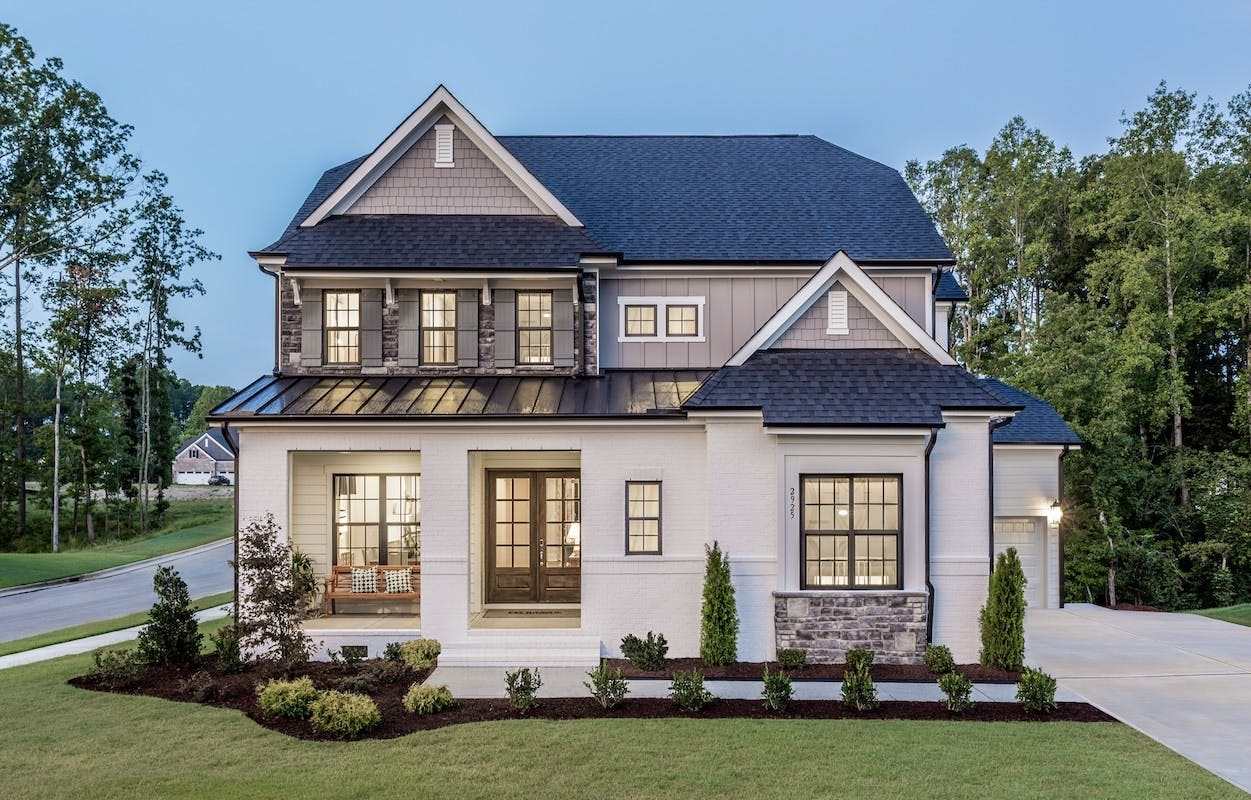
Empty homes are on the rise. So why aren't they being used to fix the housing lack?
In 1980, when Corina Poore, 36 years of ages and pregnant, very first unlocked to a run-down house in New Cross Gate, south-east London, the estate agent refused to step in with her.
Inside were dead cats, pet dog excrement and dirty mattresses. Pigeons flew in through holes in the roof and there was no indoor toilet. The extreme rotting odor was frustrating.
Still, Corina chose this was her dream home. It was roomy, the ₤ 24,000 cost was budget friendly and she was sure that whatever was fixable.
After getting a mortgage, she received a grant of ₤ 3,500 from Lewisham council, her regional authority, which spent for fixing the ceiling.
"At that point, ₤ 3,500 was rather a healthy quantity, which I desperately required," remembers Corina.
Some 45 years on, her Victorian four-storey house is worth roughly ₤ 1m - something Corina, a semi-retired film and TV critic who got in touch through Your Voice, Your BBC News, might never have managed otherwise.
However, times have altered.
Lewisham Council has continued to provide grants to the owners of empty homes for enhancements - some for as much as ₤ 20,000 - but the uptake is low.
Just 22 grants were awarded in the borough in the last five years - despite it having 2,253 empty homes. A spokesperson for Lewisham Council stated that, in addition to the grants, it is working "to make certain homes aren't allowed to remain empty or become derelict in our borough".
At present, nevertheless, 775 have actually been empty for longer than 6 months. Meanwhile, there is a national housing shortage, with increasing homelessness and long social housing waiting lists.
Since October 2024, there were nearly 720,000 empty homes in England, according to the federal government.
On the face of it, bringing these empty residential or commercial properties back into use would make up a considerable chunk of the 1.5 m homes that the Labour federal government wishes to contribute to the nation's housing stock by the end of its term.
But up until now that isn't taking place enough. The concern is why, and provided it could, in theory, be a practical service to two growing issues, is this a case of a missed chance - or is the issue more complex still?
Rising long-term empty homes
Not all empty homes remain in the alarming state of repair work that Corina's once was. But approximately 265,000 of them in England have actually been uninhabited for longer than six months and are classified by the government as long-lasting empty (LTE). (Wales, Scotland and Northern Ireland have different housing policies, as housing is a devolved matter in the UK.)
Fixing these would likewise have a considerable impact on the communities around them, as long-term empty residential or commercial properties can draw in anti-social behaviour and sometimes minimize a location's value.
Ann Devereaux, of St Werburgh's in Bristol, states that after the residential or commercial property next to her home fell vacant, it ended up being a "magnet" for criminal offense.
"It makes me feel frightened when I leave my home or can be found in during the night," she added.
The federal government has actually formerly actioned in. The 2010-15 Coalition made funding offered by means of 2 plans: the Empty Homes Programme, which offered owners grants to fix their long-term empty homes; and the New Homes Bonus scheme, which rewarded councils that brought such residential or commercial properties back into use.
They appeared to have made an effect. Between 2010 and 2016, the general variety of empty homes visited 20% to 590,000, and most importantly, long-lasting empty homes visited 33% to 200,000.
However, in 2016 the government then ended the Empty Homes Programme and reduced the rewards from the New Homes Bonus scheme - after which the concern became the sole obligation of councils.
By 2024, the number of empty homes had sneaked back up by 22% and the variety of LTEs had actually risen 32%.
A report by the charity Action on Empty Homes concluded it was "most likely" that completion of the Coalition's scheme had been an aspect behind this increase, along with changing housing market conditions and economic unpredictability.
And as soon as it was left up to regional authorities to choose what to do about empty homes, the method varied extensively from location to place.
Councils got creative - however had a hard time to solve it
Currently there is no centralised details about the actions individual English councils have taken because 2016, so we got in touch with each one to ask about their approach.
In total, 77 of the 245 councils who reacted to the BBC's flexibility of info requests stated they continued supplying grants or loans. But in many cases, take-up was so low that it didn't avoid the number of long-lasting empty homes from increasing.
A couple of councils even ended their financial assistance schemes since of this.
Corina Poore suggests that individuals may not realise such plans even exist.
But Benjamin Radstone, a residential or commercial property designer who partners with the public to identify empty homes, states there is a series of reasons that owners don't take up deals and rewards around empty homes.
"People don't wish to be pressured," he states. "They'll do it when they're all set to do it."
Other councils have had some success with plans of their own. In Kent, a No Use Empty plan provides interest-free loans for up to three years to owners who will let or sell the residential or commercial property afterwards.
Though it was established twenty years ago with a reasonably modest pot of ₤ 5m, today it is self-reliant. Nearly 200 of these loans have actually been provided over the past 5 years.
Now the council wishes to see the scheme expanded nationally. In 2015 a group of MPs, peers and housing advocates wrote to housing minister Matthew Pennycook prompting him to execute it nationwide.
Elsewhere in England, some councils have tried more innovative solutions, such as connecting private investors with empty homeowners. Almost all councils charge premium council tax rates on long-term empty homes, which can be as much as 300% of standard council tax rates.
But Mr Radstone, who refurbishes empty homes through his company You Spot Residential or commercial property, argues, that this can "push individuals away from wanting to engage with the council".
Some likewise argue that this can disincentivise councils from attending to the root problem, as empty homes bring them more earnings through the exceptional tax rates.
"We're now in a position where councils are really stating, 'Well, we're being rewarded for homes being left empty longer,'" states Adam Cliff, policy lead at the Empty Homes Network.
Councils do likewise have the power to take legal action versus owners of empty homes, however this can be dangerous, time-consuming and costly.
And while loans and grants can be utilized to target about 10-20% of long-term empty homes, Mr Cliff approximates, you would need to make usage of other processes to get the bulk of them back into use, he states.
This was the experience of Kent County Council, which states just 18% of its LTEs that were restored into usage did so after interest-free loans were released. In reality 61% did so after guidance was provided to owners around the likes of tax and VAT, raising financing and planning.
"If a council has 2,000 empty homes," Mr Cliff states, "they need 2,000 various options."
A complicated conundrum
Part of the quandary about there being a quarter of a million long-term empty homes is that this comes at a time when at least 354,000 people in England are thought to be homeless, and 1.33 m families are on social housing waiting lists.
This is likewise a time when occupants and purchasers alike speak about a housing crisis in which soaring costs leave residential or commercial properties out of reach.
The Office for National Statistics' definition of cost is homes costing less than five times regional revenues - which has actually not held true on average nationally since 2002.
More homes on the market would help tackle this, too. So why has more not been done to resolve, or a minimum of much better address, this contradiction?
The difficulty is that there is no single reason for homes being empty.
One factor is the probate system, which can in many cases take several years, during which time the departed individual's home can not be sold. Katie Watson from probate research company Finders International, thinks increasing staff numbers might help resolve a court backlog.
Then there is the issue that in some cases, councils are not able to locate the owners of empty homes. Jasmine Basran, head of policy and campaigns at homeless charity Crisis, thinks there is a "absence of coherent information".
When the BBC approached English councils, the information we were offered about the condition and factor for homes being empty covered only around 13% of their LTE stock.
This means councils are "blind to their potential", argues Ms Basran.
The debate around exceptional tax rates
The specialists we talked to had their own view on the very best services. For Mr Radstone, it is through offering tax relief to buyers, along with making sure that everyone who takes out a mortgage keeps a current will to prevent probate hold-ups.
Mr Grimshaw, meanwhile, argues that the funds collected from the premium tax rates might be used by councils to start their own loan schemes.
But Mr Cliff argues councils without an empty homes method should not be allowed to charge premiums.
Something the majority of those I talked to were unanimous on, nevertheless, was that the government needs to develop a statutory duty for councils to address long-term empty homes - and require them to investigate and act.
The previous Conservative government didn't introduce this - although in March 2024 it did permit councils to double council tax on empty residential or commercial properties after 12 months rather than 2 years.
This became part of a "long-lasting prepare for housing" to "help provide regional people the homes they require", then city government minister Simon Hoare said at the time.
We are yet to see if the new Labour federal government has actually taken the suggestion of a statutory responsibility on board in its housing method, although Housing Secretary Angela Rayner has said councils will be given more power to force proprietors to lease empty homes.
Meanwhile a spokesperson for the Ministry of Housing, Communities and City government stated: "We are determined to repair the housing crisis we have actually acquired, and we understand that having a lot of empty homes in a location can have a considerable influence on local communities.
"That's why councils have strong powers to increase council tax on LTEs, and we will reinforce councils' powers to take control of the management of empty homes, with additional updates to be offered in due course."
The UK automobile market is at a tipping point - can it be conserved?
Britain's energy bills problem - and why companies are paid huge sums to stop producing power
HS2 was destined be a mess, state insiders - due to the fact that of a 'problem in this nation'
Back in south-east London, Corina Poore does not completely understand why the scheme that worked so well for her - and permitted her to end up being the house owner of a ₤ 1m residential or commercial property - isn't doing the exact same today.
She believes it could still be a method of getting youths to make empty homes habitable too.

"When you're young you can do these things," says Corina." [There are] individuals out there who would be prepared to do it.
"There are lots of houses that are nowhere near as bad as mine that most likely simply require a cooking area and a restroom, and I think it ought to still be encouraged very intensely."
BBC InDepth is the home on the website and app for the very best analysis, with fresh point of views that challenge presumptions and deep reporting on the most significant concerns of the day. And we display thought-provoking material from throughout BBC Sounds and iPlayer too. You can send us your feedback on the InDepth section by clicking the button below.